5 Best Huddlekit Alternatives in 2026
Huddlekit is a polished newcomer with no review trail, an iframe that breaks on auth, no integrations, and no theming. Five alternatives to shortlist.

Huddlekit launched in 2025 with a genuinely unique four-screen responsive canvas — mobile, tablet, laptop, and desktop side by side in one view — and a forever-free tier that is generous enough for solo work. For a tool this new, the polish is real and the team has been shipping fast.
There are four recurring reasons people start shopping for an alternative:
- Brand new tool, no external reviews yet. Huddlekit launched in 2025 and has not built up a public review trail on G2 or Capterra. For teams that vet vendors against independent reviews before committing, that is a hard ask.
- Iframe install is the default; script install is in beta. The iframe canvas does not load pages behind Basic Auth or authenticated SaaS apps. The script-loading path that would fix this exists, but it is still in beta and does not yet cover every flow.
- No integrations. Huddlekit positions itself against the "screenshot-and-Slack workflow," but most agencies already live in Jira, Trello, ClickUp, or Linear — and there is no two-way sync to any of them today.
- No custom theme options. Every comment, shared link, and dashboard view carries Huddlekit's branding on every plan, with no way to match the widget to your own visual identity.
What you probably do like about Huddlekit — and want from any alternative — is the part the team has gotten right out of the gate. The design and the day-one feel of the product are unusually polished for a tool this young, clients can drop into a canvas and leave feedback without signing up, support is fast and personal, and the entry pricing is affordable enough that committing a single project feels low-risk:
- Nice design and UX
- No login for clients, smooth client onboarding
- Quick, responsive support
- Affordable pricing
Here are the five alternatives worth shortlisting first — each one closes at least one of the gaps above while holding its own on design, support, or price.
Simple Commenter#
Built for: Agencies · Freelancers · QA teams · SaaS teams
Best for: SaaS teams and agencies whose non-technical reviewers should comment without signing up, while the team still gets a proper dashboard, integrations, and a serious WordPress story.
One premise drove Simple Commenter from day one: a non-technical client should be able to drop feedback on a website without signing up, installing anything, or learning a new tool. Click a spot, type a comment, done — no account, no extension, no tutorial. Every other feature on the platform sits on top of that base.
When projects call for more structure, clients can either sign up in two clicks or be invited into a dedicated client portal. Once invited, the comments they leave are named, threaded, and they get a notification the moment you reply. The surface stays low-friction, with the structure a reviewer needs once a project is moving.
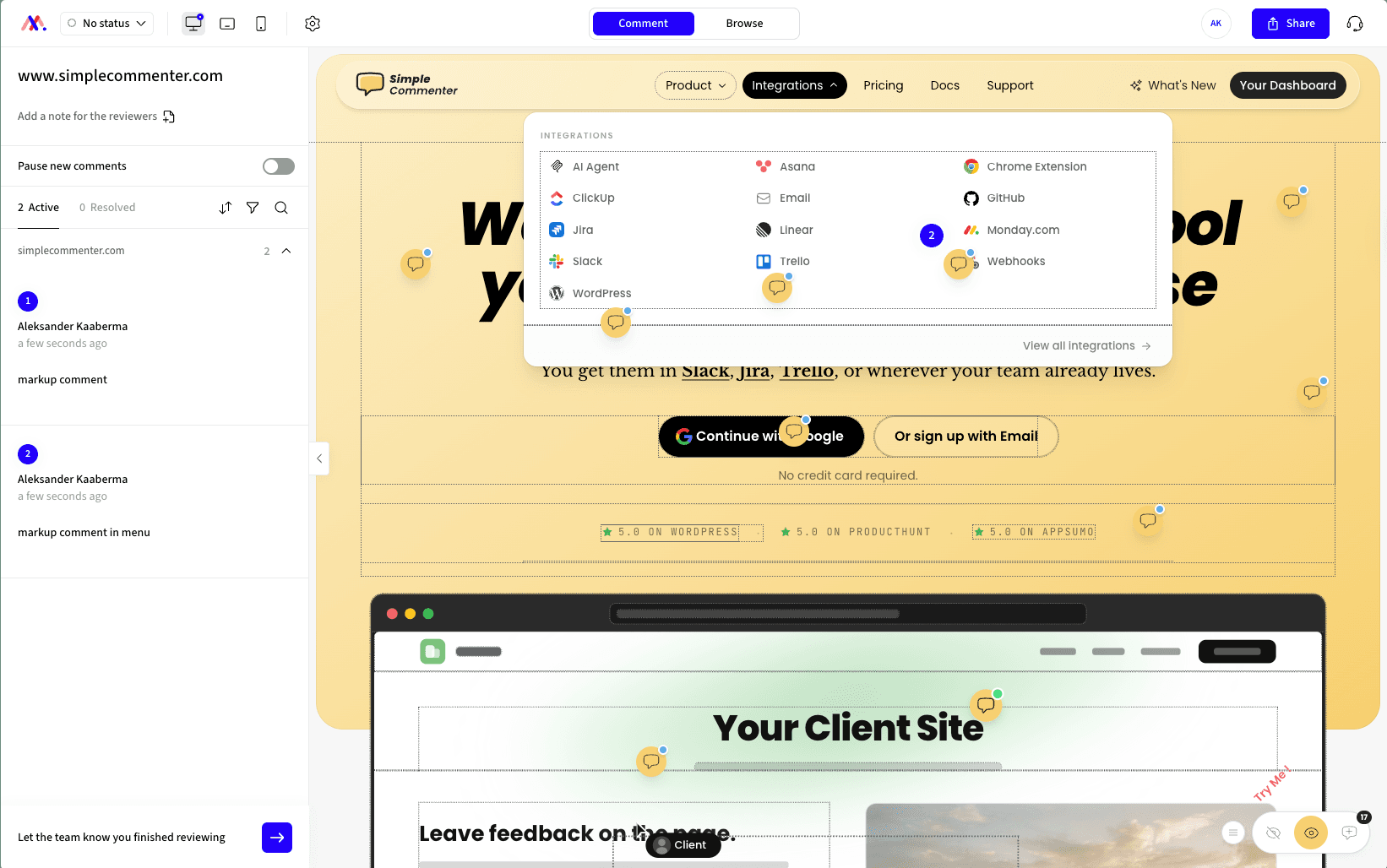
On the team side, members log into a shared dashboard where comments pipe straight into the rest of your stack. The integration list covers Slack, Trello, Asana, ClickUp, Linear, Jira, Monday, GitHub, email, and outbound or inbound webhooks — plus a native MCP server, so Claude Code, Cursor, and other AI agents can pull and reply to comments directly.
Every kind of page is in scope for the widget — marketing sites, SaaS apps behind authentication, staging environments, and WordPress. Access scales with the use case: open for public review, token-gated for staging, login-gated for client work, or SSO auto-login when SaaS teams already have internal reviewers signed into the product.
The WordPress plugin is where this tool stands out. Every other "WordPress feedback tool" on the list — Feedbucket, Userback, Marker.io, BugHerd, SureFeedback — is really a script installer wearing a plugin badge. A <script> tag goes into your site header and that gets called WordPress integration. Simple Commenter is the only one here that lets you handle comments, replies, members, and settings entirely from inside WP admin. If your team lives in WordPress, there is never a reason to leave it.

Key features:
- No-signup commenting — clients pin and reply without creating an account
- Optional client portal with invitations, named comments, and reply notifications
- Script-based widget that works on SaaS apps, staging, and marketing sites
- Three access modes — open, token-gated, login-gated — plus SSO with auto-login from your own site
- WordPress plugin with full in-WP management of comments, members, replies, and settings
- Integrations with Slack, Trello, Asana, ClickUp, Linear, Jira, Monday, GitHub, email, and webhooks
- Read, search, organize, and export feedback with your AI through the MCP integration
- Chrome extension for reviewing sites you do not own
- Automatic screenshots, file attachments, PDF and image review
Pricing:
- 14-day free trial, no credit card required
- Agency $34.99/mo (10 users, integrations, automatic screenshots, custom themes, 50 GB storage, 500 MB per file)
- Business $149.99/mo (25 users, 500 GB storage, 5 GB per file, SSO, custom domain, custom email domain, whitelisting, priority support)
- Enterprise custom (unlimited users and projects, SSO/SAML, advanced permissions, dedicated CSM, API user provisioning, SLA)
- 2 months free on annual billing
Pros:
- Lowest client friction in the category — no signup, no install, no tutorial
- Optional client portal when you do want named, notified, structured feedback
- Works on every page type: marketing, SaaS behind auth, staging, WordPress
- Only tool on this list with native in-WP comment management
- SSO and auto-login from your own site — internal reviewers never see a separate login
- Per-plan seats instead of per-seat pricing — adding clients does not raise the bill
Cons:
- Lacks full project management features like boards or kanban — feedback flows into your existing PM tool instead
- Newer to the market than BugHerd or Marker.io, so the integration list is still expanding
Reviews:
Across Product Hunt and AppSumo, Simple Commenter holds a 5.0 average, with 600+ agencies, freelancers, and enterprises running it in production. The recurring theme in customer reviews is the no-signup flow — variations on "finally, a feedback tool my clients actually enjoy" and "life changed in under 5 minutes" show up across dozens of testimonials. Web professionals coming over from Markup, Pastel, and BugHerd consistently flag how much faster client review cycles run once the login step is gone — a Jim Langman review describes a year-long stalled project that finally launched three weeks after Simple Commenter was added. The most common feature request is a kanban-style board, which lines up with the trade-off above: Simple Commenter is a feedback widget, not a PM tool. Support response time is the second-most-praised attribute; "fixed my issue in literal seconds from emailing them" is a phrase that shows up verbatim across multiple reviews.
Feedbucket#
Built for: Agencies · QA teams · SaaS teams · In-house product teams
Best for: Teams who want feedback flowing straight into a project management tool. A weaker fit when you want a self-contained dashboard for triage.
Installation is via script, with one-click installers for WordPress and Shopify. Script-based install is the most flexible loading method in our view, and Feedbucket gets it right. The WordPress plugin is a clean script installer — and nothing beyond that. There is no in-plugin dashboard for managing members or settings, which is a deliberate choice. Simple Commenter is the contrast here, where the WordPress plugin handles comments, members, and settings from inside WP admin.
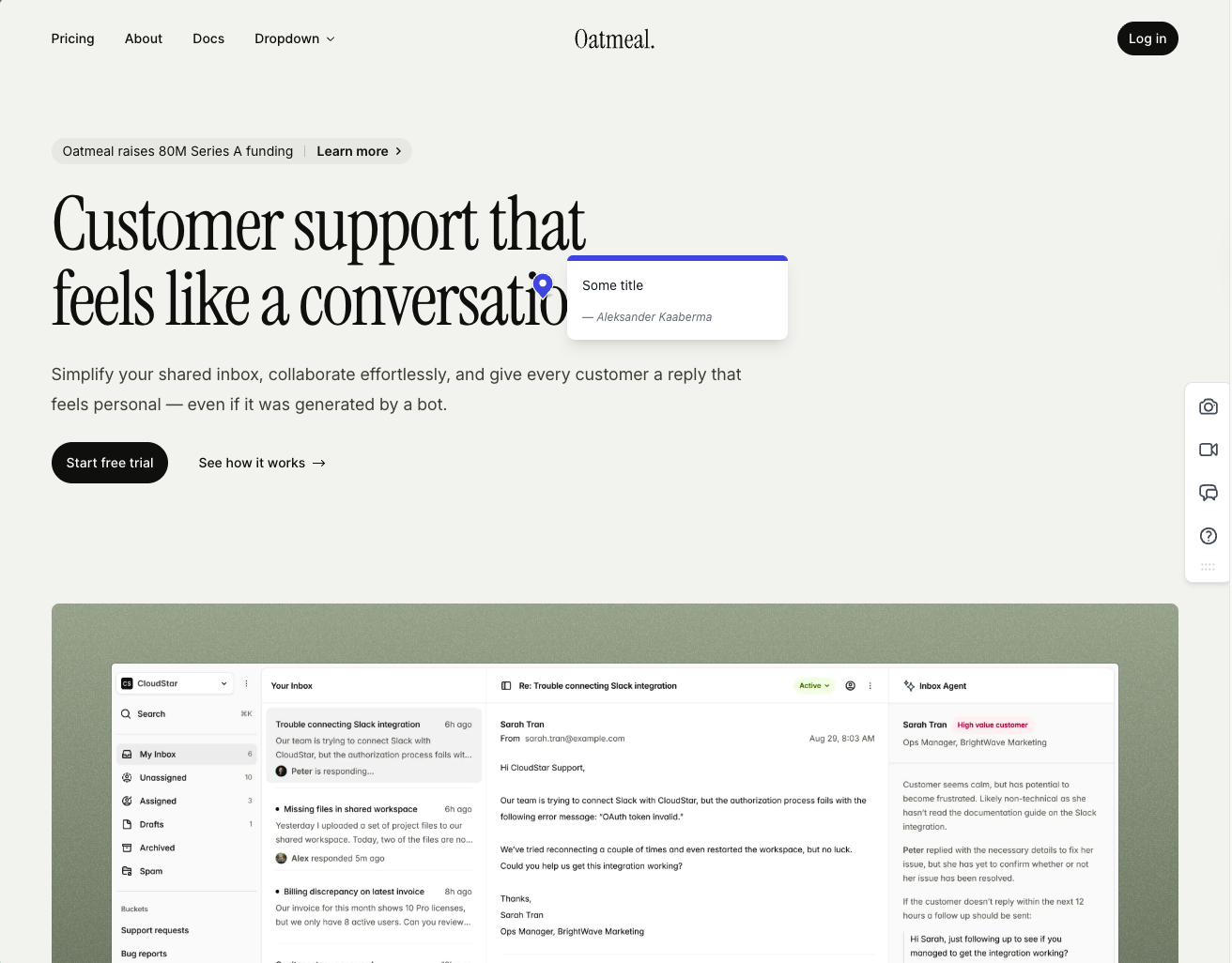
The onboarding is one of the smoother flows we tested. Clients aren't asked to sign up, every comment ships with an automatic screenshot, and the screenshots land exactly where the comment was placed.
Integrations are among the strongest on this list. Almost every project management tool you would want to pipe feedback into is supported, and the entire workflow is shaped around that idea. Feedbucket is positioned as the layer between your website and the PM tool you already use, not a replacement for it. The dashboard reflects that positioning. Filtering by tags and page is supported, but there is no native priority, ordering, or board view. For teams living inside Jira or Trello, that is fine. For anyone hoping Feedbucket would be their home for triaging feedback, it will feel thin.
One quirk surfaces in user reviews and matched what we ran into: every comment requires a title by default. For clients trying to drop a quick note about a misaligned button, the extra field is an annoying step.
A handful of other limits worth knowing. Customization is light until you upgrade, and if your stack runs on WordPress, Simple Commenter offers a deeper plugin experience with member, settings, and integration management all inside WP admin. Past those nitpicks, this is one of the most functionally complete tools we have tested — fair price, accurate screenshots, and a real integration story.
Key features:
- Script-based installation with one-click installers for WordPress, Shopify, and other major platforms
- Automatic screenshot capture, pinned exactly where the comment was placed
- Video feedback and screen recordings on every plan
- Wide integration pool covering most major PM tools
- No client signup required, guests can comment via a link
Pricing:
- Pro $39/mo (5 team members, unlimited reporters, screenshot and video feedback, integrations)
- Business $89/mo (25 team members, console logs, JavaScript API, custom branding, custom metadata, data export)
- Enterprise $259/mo (dedicated success manager, priority support, pay by invoice, SSO coming soon)
- 20% discount on yearly billing
- 14-day free trial, no credit card required
Pros:
- Clients don't need to sign up to leave feedback
- Screenshots are accurate, pinned to the right spot, and generated quickly
- Wide integration pool with pretty much every PM tool you'd want
- One-click installers for WordPress, Shopify, and other CMS platforms
- 14-day trial with no credit card asked up front
- Fair price for the feature set
- Developed in EU
Cons:
- Title field is mandatory by default on every comment (can be turned off, but it is on out of the box)
- Native dashboard is limited: filter by tags and page only, no priority or ordering
- WordPress plugin is a pure script installer with no member or settings management inside WP
- Customization options are light unless you upgrade to Business
- Built around piping feedback into a PM tool, not as a standalone home for triaging
Reviews:
Public reviews lean strongly positive and line up with what we saw in testing. Users consistently flag two things: the no-signup flow for clients, and how reliable the tool feels day to day. The "bug-free" experience comes up a lot, which is rarer in this category than you would expect. Integration depth is the other recurring praise — teams already living in Jira, Trello, or Asana describe Feedbucket as the missing layer between their site and their tracker. Criticism is light and tends to focus on the same nitpicks we ran into: a thin dashboard, and limited customization on lower tiers.
Pastel#
Built for: Freelancers
Best for: Solo creators working through static design deliverables. Hard to recommend for live-website feedback in 2026.
Pastel has been around since 2016, making it the senior tool on this list. That tenure cuts both ways — the product is mature and the UI is polished, but the workflow has not kept up with what website feedback means today. Reviews say it works once you have a canvas set up, and that is technically true. The harder question: is the workflow Pastel forces you into the one you actually want?
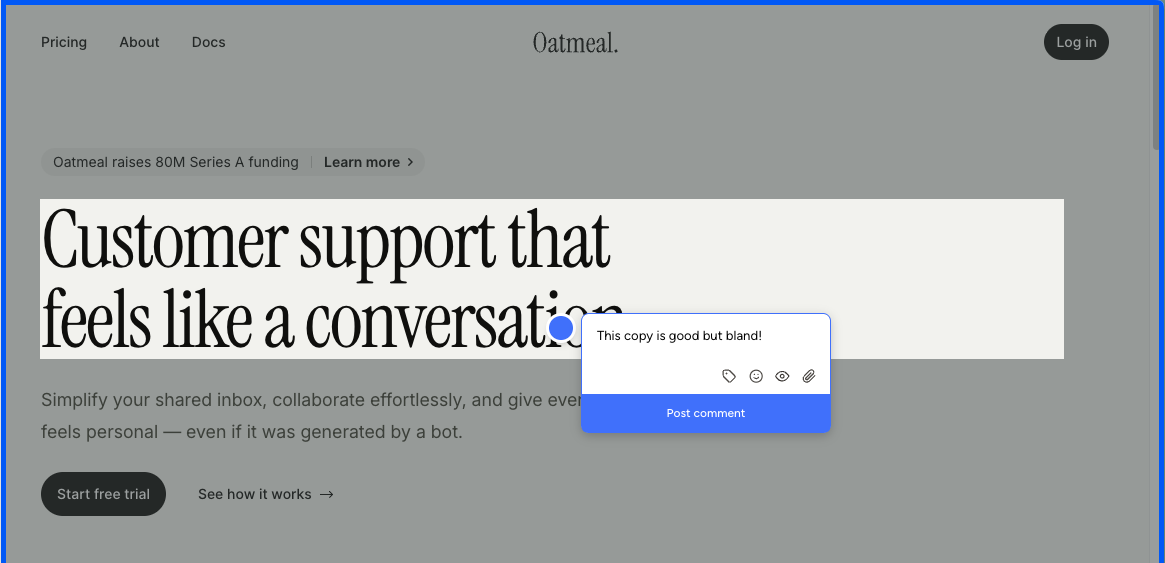
Setup is the easy part. Paste a script tag into your site or use the Chrome extension, and Pastel generates a "canvas" — a Pastel-hosted URL that frames a snapshot of your site. Reviewers leave comments inside that canvas, not on your live site. The Chrome extension does not change that pattern; it only spins up a new canvas from whatever page you are on. There is no on-page commenting in the BugHerd or Simple Commenter sense.
There is a cost to the iframe model most teams only discover after committing: feedback cannot be submitted from an actual mobile device. Mobile review happens inside a desktop-emulated viewport, and anyone who has spent time in QA knows emulated mobile and real mobile behave differently. Touch handlers fire differently, fixed positioning misbehaves, modals jump around, and a real share of the bugs you want clients to flag will never surface in the emulator. For a website feedback tool in 2026, that is a hard limitation.
The free tier has another constraint that is easy to miss until you hit it: a 72-hour commenting window. Once a canvas goes out, comments automatically close after three days. Some teams use it as a forcing function for clients who otherwise drag review cycles out for weeks. For most teams it just means spinning up a fresh canvas every time a stakeholder needs another day.
Pricing reinforces the gap. Free Forever is generous on guest reviewers but capped at one active canvas plus the 72-hour window. Pro at $35/mo bumps you to three canvases and two users, and that is essentially everything you get — no integrations, no webhooks, no Trello, Asana, Jira, or Zapier. Those land on the Team tier at $119/mo. At the $35/mo price point, other tools include integrations, embed on the live site, and let clients comment from a real phone. Pastel is asking the same money for noticeably less.
Key features:
- Iframe-based feedback canvases hosted on Pastel
- Asset feedback on images and PDFs, not just live websites
- Script-tag installation
- Chrome extension to spin up new canvases
- File attachments and user mentions in comments
- Unlimited guest reviewers on every plan
- Project spaces, labels, and private comments
Pricing:
- Free Forever $0/mo (1 user, 1 active canvas, 72-hour commenting window, unlimited guest reviewers, 2 GB video)
- Pro $35/mo (2 users, 3 active canvases, CSV export, 100 GB video, no integrations)
- Team $119/mo (starts at 5 users, $24/user after, unlimited canvases, Trello/Asana/Jira/Zapier/webhook integrations, 500 GB video)
- Enterprise $450/mo (starts at 10 users, $45/user after, SAML SSO, SOC 2 report)
- 14-day free trial on all paid plans
Pros:
- Pin comments on images and PDFs, not just live sites
- Mature product, around since 2016
- Fast setup with a simple script tag
- Unlimited guest reviewers on every plan
Cons:
- Iframe-only feedback: reviewers comment on a Pastel-hosted snapshot, not your live site
- No real-device mobile feedback. Mobile review is a desktop-emulated viewport, which behaves differently from an actual phone
- 72-hour commenting window on the free tier closes comments automatically after three days
- Chrome extension only creates new canvases; it is not an on-page commenting tool
- Integrations are locked to the $119/mo Team tier; nothing on Pro
- Pro tier feels thin at $35/mo against tools at the same price that include integrations and live-site embedding
- Hard 3-canvas cap on Pro means active projects compete for slots
Reviews:
Reviews skew positive on the basics. Setup is fast, the canvas concept is easy to grasp, and once a reviewer is inside the canvas the commenting itself works. Criticism turns up at the edges of that workflow — clients balk at opening a separate tool to leave feedback, stakeholders who do not review within 72 hours on Free hit a closed canvas and need a fresh link, and anyone trying to test on a real phone gets funnelled into a desktop-emulated viewport. None of these are dealbreakers for solo creators reviewing static deliverables, but they stack up fast for teams running live-site review cycles in 2026.
Markup.io#
Built for: Agencies · Freelancers
Best for: Design agencies reviewing client work on WordPress or Squarespace. Hard to recommend for Basic Auth sites or for teams that want to test before paying.
Markup.io lands in the same bucket as Ruttl and Volley — you cannot test the tool fully without handing over a card. There is no free tier and no card-free trial, which makes it a real bummer to evaluate before committing. We paid for it, so this section is based on actual hands-on time, not just marketing copy.
There are two installation paths. The first is the proxy: paste a URL into Markup.io and it serves your site through a Markup-hosted address that reviewers comment on. The convenience is that there is no script to embed; the catch is that any site protected by Basic Auth will not load through the proxy.
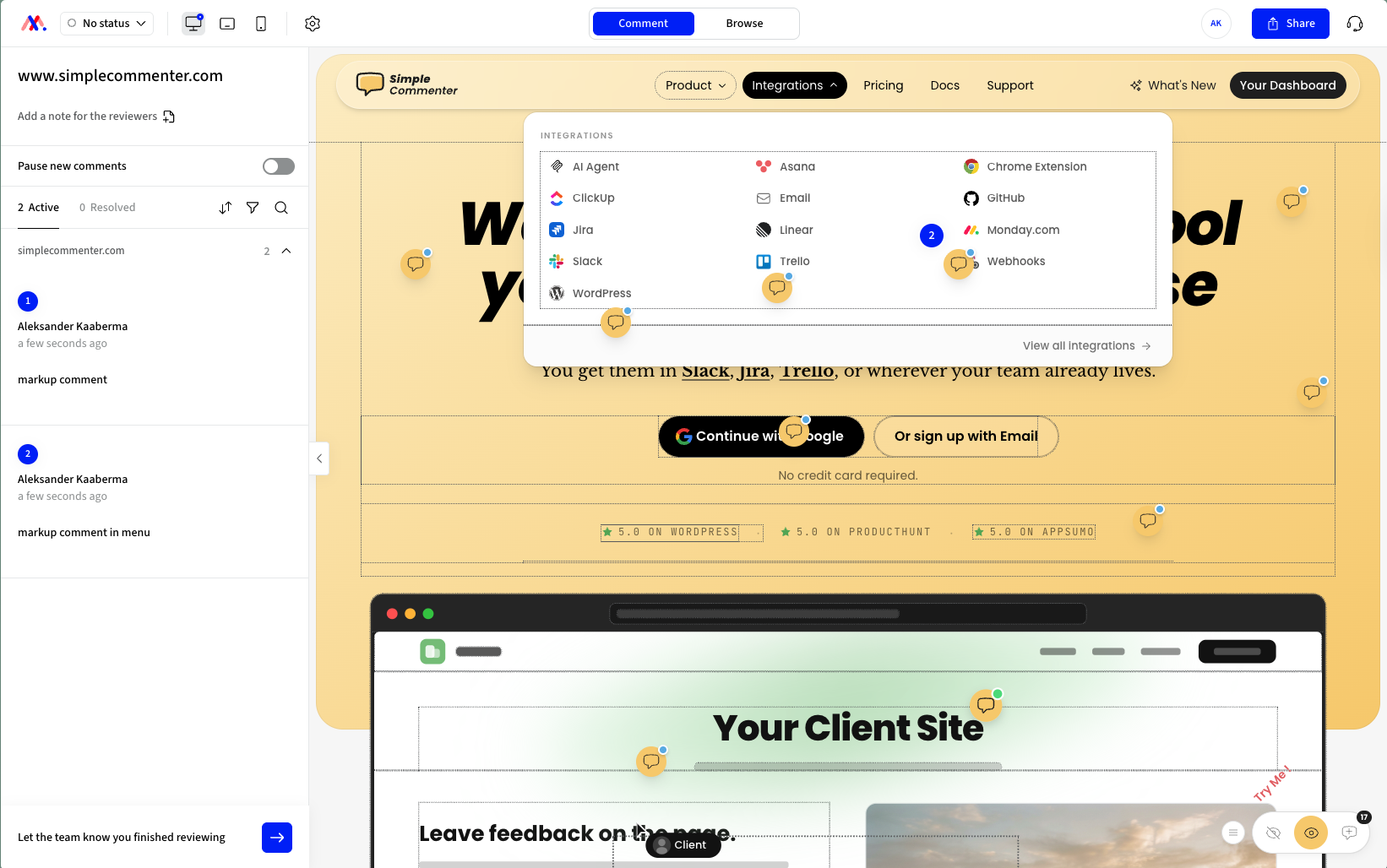
The second path is the Chrome extension, which runs on the live page and is the better of the two experiences. It does ship with a visible bug — hovering on the page draws a border around every div under the cursor. Even so, it is a more useful extension than the ones from Pastel and Volley. Markup's extension is a full overlay that makes the live site commentable, while Pastel and Volley only use their extensions to spin up a new project.
The downside is the same one that comes up across reviews of every Chrome-extension-first tool — onboarding clients is hard. Asking a stakeholder to install a browser extension before they can leave a single comment is friction most clients will not push through. And there is no mobile feedback path, since the extension only runs on desktop Chrome.
Every comment is meant to ship with an automatic screenshot, but in our testing the screenshot landed in a totally different spot than where the comment was placed. That is not a small bug for a tool whose main capture format is a screenshot.
The integration list is short for a tool at this price point. Zapier, Slack, Microsoft Teams, Loom, and a Chrome extension — ClickUp is listed as "coming soon." There is no Jira, Linear, Asana, Trello, or webhook story beyond Zapier. The dashboard is bare-bones and the settings are minimal. The public roadmap lists more integrations as a future item, and across all of 2025 the team shipped only six features. For a tool that has been around for years with a sizeable user base, the pace of product work is hard to reconcile with the price.
Pricing is the strongest pitch in the offer — a single Pro plan at $79/mo with unlimited users, one workspace, unlimited markups, 500 GB storage, folders, and shareable links. No per-seat math. For larger teams that is genuinely useful, but for smaller teams or solo reviewers, $79/mo with no entry tier is a steep starting point compared to tools on this list that begin at $29 to $39.
Key features:
- Proxy-based review (no script required) plus a Chrome extension for live-page commenting
- Automatic screenshot on every comment
- Unlimited users on a single flat plan
- Folders, shareable links, and basic workspace management
- Loom integration for video and screen recordings inside comments
Pricing:
- Pro $79/mo (unlimited users, 1 workspace, unlimited markups, 500 GB storage)
- No free tier, credit card required to create an account
- No free trial without payment details
Pros:
- Flat pricing with unlimited users, no per-seat scaling
- Two install paths: proxy (no script) or Chrome extension
- Loom integration ships out of the box
Cons:
- Paid-only with a credit card required just to create an account
- Screenshots captured from the wrong spot on the page in our testing
- Chrome extension draws a border around every div on hover, looks unfinished
- Proxy mode does not work on sites behind Basic Auth
- Short integration list (Zapier, Slack, Teams, Loom, Chrome extension); ClickUp still "coming soon"
- Bare-bones dashboard with limited settings
- Slow pace of product development: roughly six features shipped across all of 2025
- $79/mo entry price is steep for smaller teams compared to alternatives at $29–$39
Reviews:
G2 reviews skew positive overall, and the recurring praise lands on the same handful of things — ease of use, the self-service setup without a sales call, and how quickly non-technical clients pick the tool up the first time they use it. Agencies and freelance designers in particular describe it as the kind of tool you can hand to a client and trust them to leave useful, in-context feedback. Reviewers also call out the rich-text commenting, shareable links, and being able to review across desktop, tablet, and mobile inside the browser as features that keep them on the platform.
Criticism in the reviews is consistent and lines up with what we ran into during testing. Pricing is the most common complaint, with multiple reviewers saying the one-tier pricing is too steep for most use cases. Specific gaps still have not been addressed: data is locked inside the platform with no export, the Zapier integration does not support historical sync, and page load times can be slow inside the proxy view.
A note on review freshness — a chunk of the public reviews date back to early 2023 and reference a free tier with unlimited users that no longer exists. The pricing model has tightened since, and reviews from 2024 and 2025 spend more time on what is missing than on how generous the free plan used to be. Combine the slowed product cadence, the price increase, the Basic Auth gap on the proxy, and the screenshot bug we ran into, and the reviews land where you would expect: the tool still gets the basic job done, but it is no longer the obvious pick it was three years ago.
BugSmash#
Built for: Freelancers · Agencies
Best for: Solo creators and small teams who want to review design assets, PDFs, and websites in one place. A weak fit for live-site review on authenticated or interactive web apps.
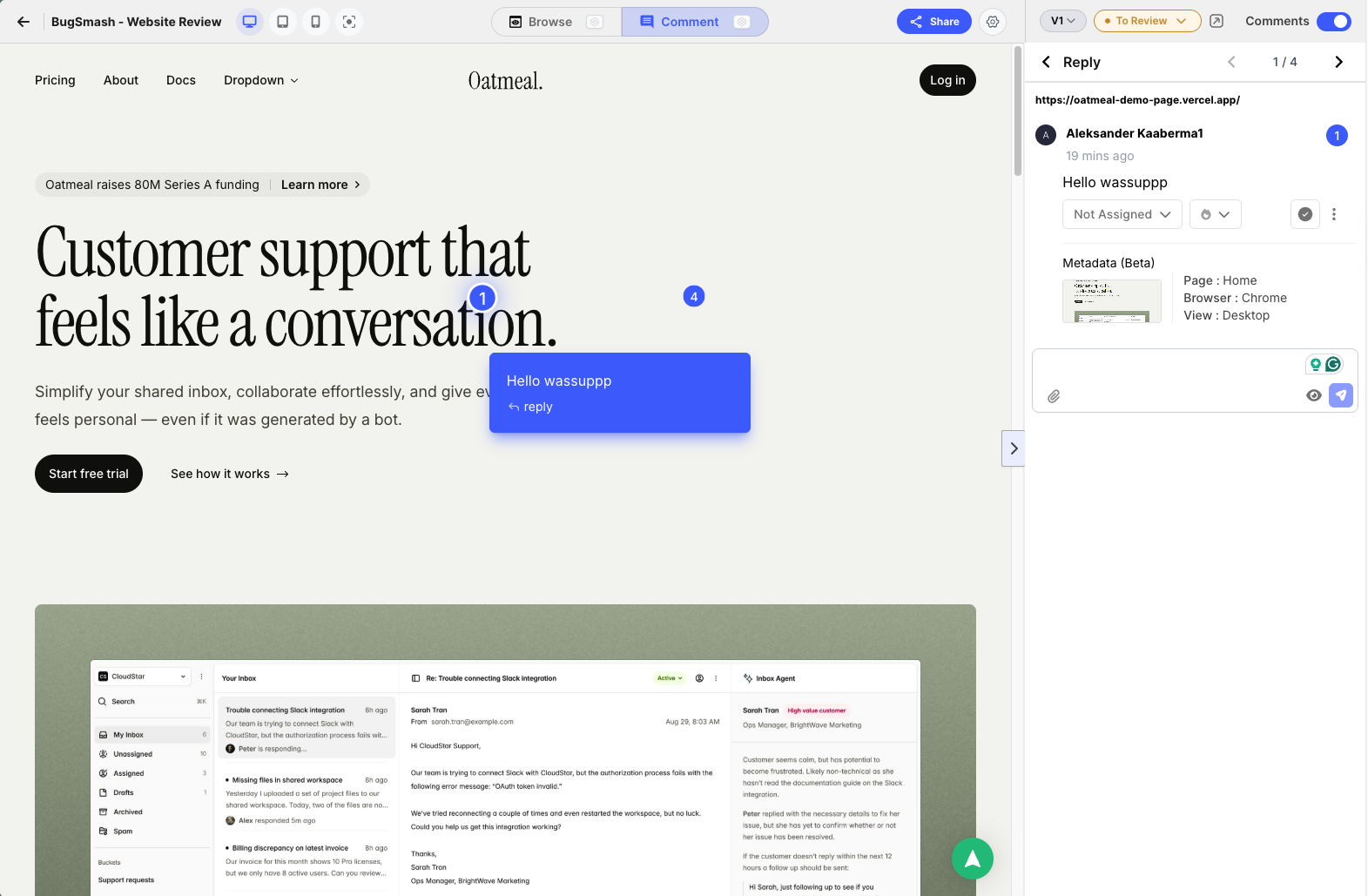
One of the newer entrants on this list, BugSmash launched in 2025, and despite the name overlap with BugHerd it is a different category of tool entirely. It sits much closer to Pastel, Markup.io, and Ruttl — an iframe-style review tool where reviewers comment on a BugSmash-hosted snapshot of your asset rather than your live website.
The iframe model carries the same trade-offs covered across the other reviews. Static marketing pages and design files load without issue. Sites behind Basic Auth, pages that refuse to render in an iframe, and complex authenticated SaaS apps will not. Mobile feedback runs through a desktop-emulated viewport, which behaves differently from a real phone. For review work that is mostly static pages and design files, the iframe is fine. For a real product, expect to bump into walls.
Scope is what sets BugSmash apart in this group. It is not strictly a website feedback tool — you can pin comments on websites, design files, PDFs, images, videos, audio, and mobile app screens, all from the same dashboard. The Figma plugin is the real standout: export design frames straight from Figma into a BugSmash project, no manual screenshot juggling. No other iframe-style competitor on this list ships a Figma plugin.
Friction shows up in testing as account-gated commenting. The hosted iframe URL can be public, but anyone who wants to leave a comment has to sign up first. That breaks one of the patterns clients quietly love about Pastel and Markup-style tools — drop a link, leave a note. With BugSmash, the link drop comes with a "create an account" wall. Script-based tools like Feedbucket and Simple Commenter push this further: share a preview link to your actual site and the reviewer never has to know a feedback tool is involved.
If you are weighing Markup.io, Pastel, or Ruttl for design and asset review, BugSmash is worth a look — same iframe model, broader asset coverage, the only Figma plugin in the group, and a free tier that genuinely works.
Key features:
- Iframe-based feedback on websites, plus dedicated commenting on PDFs, images, videos, audio, and mobile app screens
- Figma plugin to export design frames directly into BugSmash projects
- Automatic screenshot on every comment
- AI review summaries (limit varies by plan)
- Slack and ClickUp integrations on Starter; full integration list on Team
Pricing:
- Free $0/mo (2 projects, 2 members, unlimited guest reviewers, 5 GB storage, 2 AI reviews)
- Starter $19/mo (50 projects, 2 members and 5 external collaborators, 50 GB storage, 20 AI reviews/month, Slack and ClickUp)
- Team $59/mo (unlimited projects, members, and collaborators, 300 GB storage, unlimited AI reviews, custom branding with subdomain/name/logo, all integrations)
- Enterprise $299/mo (multiple workspaces, 1 TB storage, custom domain, API access, SSO)
- 30% off on annual billing
- 7-day free trial on paid plans
Pros:
- Broader asset support than any other iframe tool on this list (web, PDF, image, video, audio, mobile app)
- Figma plugin is unique among iframe-style competitors
- Free tier is genuinely usable, not a trial-in-disguise
- Automatic screenshot on every comment
- Custom branding on the Team tier without an enterprise upgrade
Cons:
- Iframe-only commenting: reviewers leave feedback on a BugSmash-hosted snapshot, not your live site
- Anyone leaving a comment has to sign up — no anonymous guest commenting
- Sites behind Basic Auth and pages that refuse to load in iframes are out of scope
- No real-device mobile feedback, only desktop-emulated viewports
- Slim integration list on lower tiers (Slack and ClickUp on Starter; full list locked to Team)
- AI review limits on every tier below Team
- Small public review base outside of AppSumo
Reviews:
Most public reviews live on AppSumo, where BugSmash ran a lifetime-deal campaign at launch. Reviewers consistently frame it as a strong alternative to Markup.io and Pastel, and praise the support team for fixing reported bugs within a day or two — a contrast they draw explicitly against the larger incumbents in the category. One representative quote: "It's new, so there may still be a few bugs to squash, but when I've found one I reported it and it got fixed within a day or two, which is more than I can say for the larger companies that BugSmash competes against."
The honest caveat: a full assessment has to wait until subscriber reviews start landing on G2 or Capterra. AppSumo reviewers paid a one-time lifetime fee, not the current $19 to $59 monthly subscription, so the price-to-value math from their reviews does not translate to teams signing up today. For now though, BugSmash looks promising — the product, the responsiveness of the team, and the early sentiment all point in the right direction.
Which one should you pick?#
If you are escaping Huddlekit's iframe wall on a SaaS app behind auth or a Basic Auth staging site, Simple Commenter and Feedbucket are the right shape — both are script-based, both run on the live page, and both ship working PM-tool integrations from the entry tier. Pastel is the mature canvas pick when polish on static design feedback matters more than responsive viewports. Markup.io is the largest iframe player and the cleanest fit when flat unlimited-user pricing is the entire pitch. BugSmash is the broadest iframe peer if you also need feedback on PDFs, images, videos, or Figma frames in the same dashboard, and the team's support responsiveness matches what you already like about Huddlekit.
Found this useful? Add us as a preferred source and Google will show you more of our guides in Search and AI Overviews.